The rise of organized crime in Latin America presents a growing challenge to state sovereignty, with criminal organizations evolving into integrated economic and political entities. These groups are increasingly functioning as a “parallel power” capable of challenging national governments and imposing new geopolitical realities. This phenomenon, rooted in decades of drug trafficking, is now characterized by unprecedented production levels and lucrative markets, particularly in synthetic drugs.
According to reports from the United Nations Development Programme, Latin America faces a stark security imbalance. Despite accounting for only 9% of the global population, the region is responsible for approximately one-third of homicides worldwide (33%). This violence is not random but reflects a power struggle between the state and criminal organizations, with 40% of these murders directly linked to cartel activities. These cartels have become the backbone of an alternative economy stretching from the Colombian jungle to Mexican streets.
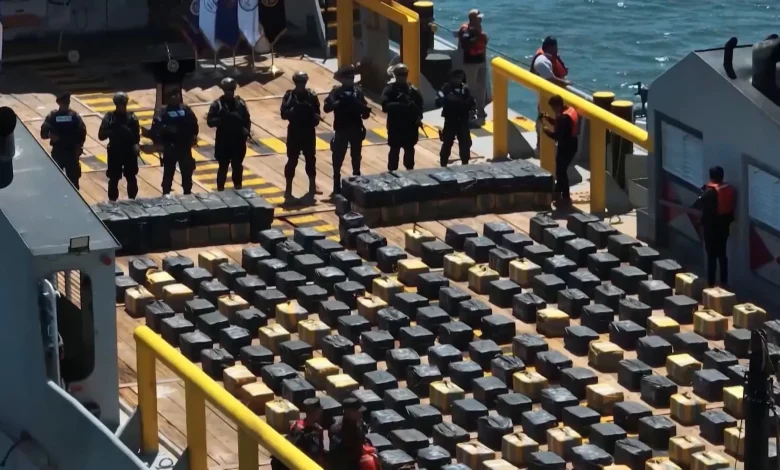
The report highlights a significant increase in cocaine production, reaching a record 2,700 tons in 2022, a 20% rise in just one year. The landscape is also being reshaped by synthetic drugs, with “fentanyl” emerging as a particularly profitable commodity. The vast profit margins, from a few thousand dollars per gram in Mexico to nearly two million dollars upon distribution, grant cartels immense power to penetrate institutions and circumvent border controls through the smuggling of small, high-value shipments.
خريطة النفوذ (Map of Influence)
The UN report identifies four highly active drug cartels posing the greatest threat to regional and international stability:
* Jalisco New Generation Cartel (CJNG): Now classified as the foremost criminal threat, its influence spans Mexico, the United States, Asia, and Europe. It commands a force of over 18,800 members and partners, actively involved in fentanyl production, human trafficking, and money laundering.
* Sinaloa Cartel: One of the oldest and most dangerous cartels globally, it has spent 50 years building a complex global smuggling network with immense intelligence and logistical capabilities.
* Clan del Golfo (Gulf Clan): This organization serves as the dominant force in Colombia, with an estimated 5,000 to 13,000 armed members. It controls entire geographical areas and engages in illegal mining and human trafficking.
* Emerging Organizations: These include the Primeiro Comando da Capital (PCC) in Brazil, which operates its empire from within prisons, and “Cartel de los Soles” in Venezuela, designated as a transnational terrorist organization by Washington.
من الإجرام إلى الحوكمة (From Crime to Governance)
A more alarming development is the emergence of “criminal governance,” as described in the UN report. Bolstered by billions in revenue and vast numbers of operatives, cartels are moving beyond evading the law to actively shaping it in countries like Brazil, Venezuela, and Colombia. These organizations manage prisons, provide social services, and impose their own forms of taxation, thereby eroding state sovereignty and rendering national governments increasingly fragile in the face of transnational criminal power and influence.
The growing influence and operational sophistication of these cartels raise concerns about the long-term stability of governance in Latin America. Future developments will likely focus on the effectiveness of international cooperation, the ability of affected states to reclaim territorial control, and the potential for these criminal structures to further entrench themselves as de facto authorities.